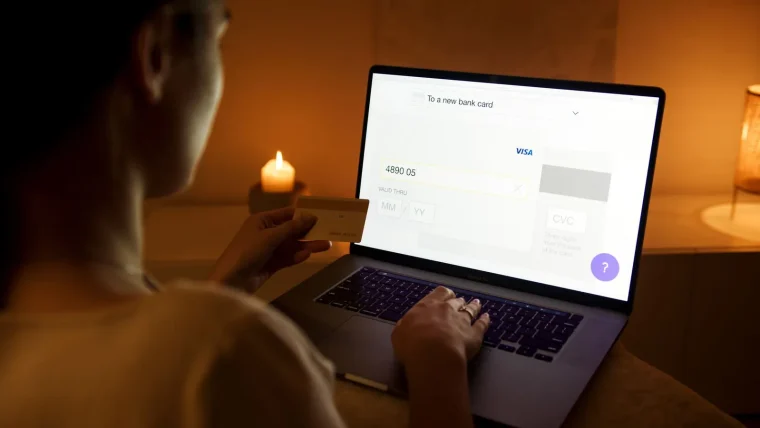

A woman I helped last spring got a text that said her package was stuck at customs and needed a two dollar fee. Two dollars. Who wouldn’t pay two dollars to free a package they were waiting on? She tapped the link, typed her card number, and within an hour that card had three charges she never made, one of them for four hundred dollars.
That is how modern scams work. They are not the clumsy emails from a foreign prince anymore. They are small, believable, and timed to catch you when you are busy. The good news is that almost every scam shares the same handful of tells, and once you learn them, you spot the trap before you fall in.
Key takeaways

- Nearly every scam relies on urgency, fear, or a too-good-to-be-true reward to rush your decision.
- Scammers reach you by email, text, phone, and pop-up, but the warning signs stay the same across all of them.
- Never click links or call numbers from an unexpected message; go to the company yourself using details you already have.
- Slowing down for sixty seconds defeats the vast majority of scams, because pressure is the whole trick.
Why scams work on smart people
The biggest myth about scams is that only gullible people fall for them. That is wrong, and believing it makes you more vulnerable, not less. Scammers are professionals who test their scripts on thousands of people and keep only the versions that work.
They win by hijacking your emotions before your logic catches up. A message that makes you afraid (your account is locked) or excited (you won a gift card) triggers a fast, gut reaction. In that split second, the careful part of your brain is offline.
They also lean on authority and familiarity. A logo, a spoofed phone number, or the name of a company you actually use makes the message feel legitimate. None of those things are hard to fake, which is exactly why they are so effective.
The four channels scammers use
Scams arrive through four main doors. Learning the flavor of each one helps you stay alert no matter how they reach you.
Email (phishing)
Phishing emails impersonate banks, delivery services, streaming platforms, and your own employer. They usually push you to click a link and log in on a fake page that harvests your password. Our deeper walkthrough on how to spot a phishing email before you click breaks down the exact clues, from mismatched sender addresses to urgent threats.
Text (smishing)
Scam texts are booming because people trust their phones and read texts within minutes. Fake delivery notices, bank alerts, and prize offers dominate this channel. If you get odd messages regularly, our guide to recognizing scam texts and smishing shows the safe way to respond without handing over a single detail.
Phone (vishing)
A live human on the line is persuasive, which is why phone scams cause some of the largest losses. Callers pretend to be your bank, a government agency, or a family member in trouble.
Pop-ups and fake alerts
A scary message freezes your screen and claims your computer is infected, urging you to call a number. These lead to tech support scams, where a stranger talks you into granting remote access to your machine.
The channel changes, but the goal is always the same: get your money, your login, or remote access to your device. If a message wants one of those three things urgently, treat it as suspicious until proven otherwise.
The warning signs that never change
Here is the part worth memorizing. Almost every scam, on any channel, waves at least one of these flags.
| Warning sign | What it looks like | Why scammers use it |
|---|---|---|
| Manufactured urgency | “Act within 24 hours or your account closes” | Panic stops you from checking |
| Unexpected contact | A message about something you did not start | You have no context to compare against |
| Requests for secrets | Asking for a password, PIN, or one-time code | Real companies never need these |
| Unusual payment | Gift cards, wire transfer, crypto, or “keep it secret” | These are hard to trace or reverse |
| Slightly-off details | Odd sender address, misspelled domain, generic greeting | Fakes are close but rarely perfect |
You do not need to spot all five. One is enough to stop and verify. When I teach this to family members, I tell them to treat any single flag as a full stop, not a yellow light.
No legitimate bank, retailer, or government agency will ever ask you to pay with gift cards. If anyone requests payment in Apple, Amazon, or Google Play cards, it is a scam one hundred percent of the time. There are no exceptions to this.
Your one reliable defense: verify independently
If you remember only one habit from this whole piece, make it this one. Never use the contact details inside a suspicious message. Instead, reach the company through a channel you already trust.
Got a text from “your bank” about fraud? Do not tap its link. Call the number printed on the back of your card, or open the bank’s official app. Got an email about a locked account? Type the website address yourself instead of clicking.
This single move disarms nearly every scam, because the whole plan depends on you using their fake link or number. Route around it, and the trap has nothing to grab. It takes an extra minute and saves you an enormous headache.
Save the real phone numbers and websites for your bank, your email provider, and your card issuer in your contacts now, before you need them. When a scary message arrives, you will have the trusted number one tap away instead of scrambling.
Simple habits that shrink your risk
A few background protections make you a much harder target, even on the days your guard is down.
Turn on two-factor authentication for your email and bank, so a stolen password alone cannot open your accounts. Keep your phone and computer updated, since many fake-alert scams exploit old software. Slow down when any message rushes you, because speed is the scammer’s best friend, not yours.
The U.S. Federal Trade Commission keeps a plain-language library of current scams at consumer.ftc.gov/scams, and it is worth a bookmark. If you ever want to check whether a specific tactic is a known trick, that is a solid first stop.
What to do if you already slipped
Falling for a scam does not make you foolish; it makes you human, and it happens to millions of careful people every year. What matters is acting fast.
If you shared a password, change it immediately and everywhere you reused it. If you gave up card details, call your bank to freeze the card and dispute the charges. If you let someone onto your computer, disconnect from the internet and run a security scan. Speed limits the damage far more than perfection ever could.
Your afternoon checklist
- Save the real phone numbers and website addresses for your bank, card issuer, and email provider in your contacts.
- Turn on two-factor authentication for your email and banking accounts.
- Memorize the five warning signs and treat any single one as a reason to stop.
- Adopt the verify-independently rule: never use links or numbers from an unexpected message.
- Update your phone and computer so fake-alert scams have fewer holes to exploit.
- Bookmark the FTC scam library so you can check unfamiliar tactics quickly.
- Tell one family member the gift-card rule, since it stops a huge share of losses.
Scammers are betting that you are too rushed to pause. Prove them wrong, and you win almost every time. Keep these signs in the back of your mind, and the next “urgent” message becomes something you calmly delete instead of something that costs you.